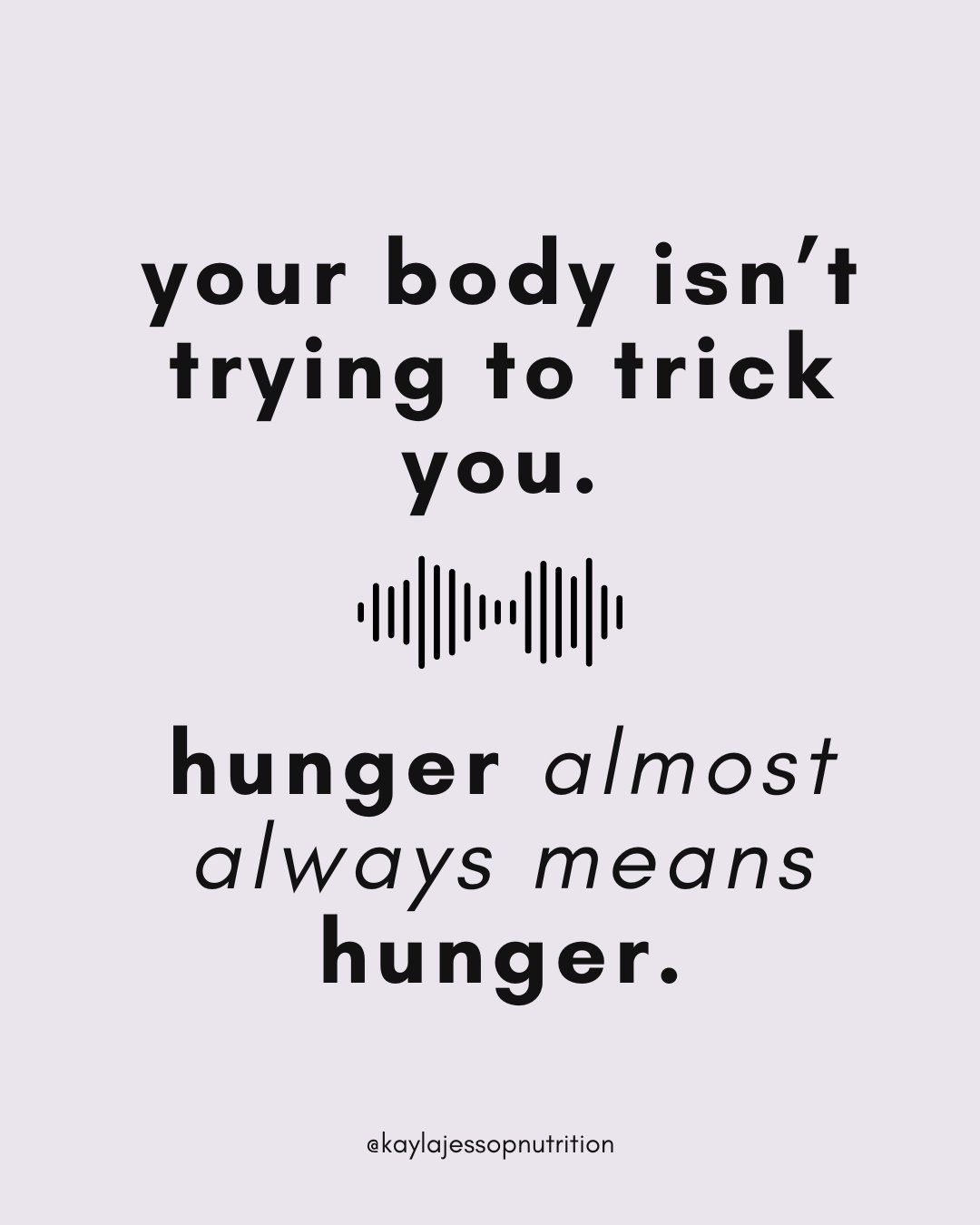
Diet culture loves to teach us that our bodies can’t be trusted. One of the most persistent examples is the idea that when you feel hungry, it “really just means you’re thirsty.” You’ve probably heard this advice: “Drink a big glass of water and wait it out.” But this myth doesn’t honor biology, body trust, or lived experience — especially for people with disordered relationships with food.
Myth vs. Reality
Here’s the truth: Hunger is almost always hunger.
Your body is an incredibly intelligent system. It uses specific cues to communicate different needs. Hunger and thirst are two separate signals, driven by different hormones, sensations, and biological pathways. While they can sometimes overlap — like when someone is overly busy, disconnected from cues, or recovering from chronic dieting — hunger does not mean dehydration. Hunger means your body needs food.
The “just drink water instead of eating” message is often rooted in restriction, not well being. For many people, especially those recovering from diet rules, using water to suppress hunger can trigger deeper problems: bingeing later, losing sensitivity to internal cues, or reinforcing shame around eating. From an Intuitive Eating and HAES perspective, responding to hunger with food is not only appropriate — it is essential.
Of course, hydration matters. Drinking water throughout the day supports digestion, energy, mood, and overall health. But hydration is not a replacement for nourishment. When you’re hungry, eating is the most supportive and biologically aligned response.
What Actually Matters
Rebuilding trust with your body means allowing hunger to be what it is — a legitimate, valid cue that deserves respect. Instead of second-guessing or overriding your needs, try tuning in with curiosity:
Where do I feel this hunger? What might satisfy me? What does my body need right now?
Honoring hunger is a powerful step toward healing your relationship with food. You don’t have to trick your body or wait it out. You’re allowed to respond with nourishment, consistency, and compassion. Your hunger signals aren’t a mistake — they’re a message. And you deserve to listen.
Disclaimer: If you struggle with an eating disorder, chronic dieting, or are working towards a path to rediscover how to fully listen to your body, we’re here to help.